About the Program
Big Shot Music and Creative Arts Program is a 12-week music program for autistic and neurodivergent adults, ages 18 to 64. We introduce singing, drumming, songwriting, and recording to build confidence, communication, friendship, and independence. Big Shot does not train professional musicians. We use music to help autistic and neurodivergent adults to communicate, connect, and build a sense of community. Making music in a group also builds a sense of community.
Program Goals
Musical growth through singing, drumming, instruments, songwriting, recording, and production, at a pace that fits each person.
Communication and self-expression, in whatever way works for that person.
Confidence, and the ability to speak up, make choices, and be heard.
Learning to notice and manage feelings, using music as a helpful tool.
Teamwork, patience, flexibility, and leadership, practiced in a calm setting.
Independence, built through routines, caring for equipment, following a schedule, and finishing tasks.
A look at music-related jobs, such as recording, sound, production, and event support.
Community involvement, so what participants learn here carries over into daily life.
The chance to create something original.
A Typical Session
| Time | Activity | What Happens |
|---|---|---|
| 9:00 – 9:20 | Arrival & Check-In | Belongings put away, schedule reviewed, check-in on how they’re feeling. |
| 9:20 – 9:40 | Music Warm-Up | Breathing, movement, rhythm, or vocal warm-ups. |
| 9:40 – 10:25 | Core Instruction | Teaching the week’s music skill in a way that fits how each person learns. |
| 10:25 – 10:40 | Break | Snack, water, a sensory reset, and social time. |
| 10:40 – 11:20 | Create & Collaborate | Group music-making, songwriting, recording, or production work. |
| 11:20 – 12:00 | Perform, Lead & Reflect | Sharing what they created, leadership roles, and setting a goal. |
Download a week-by-week breakdown of everything participants experience, from Week 1 through the Big Shot Live showcase.
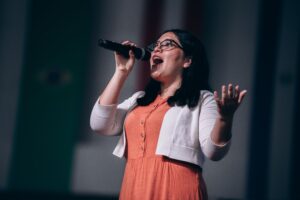
Breathing, pitch, melody, expression, microphone technique, and group singing.
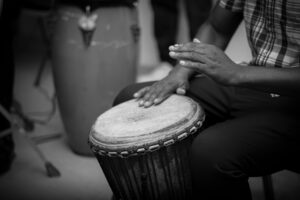
Drumming, tempo, patterns, coordination, and call-and-response exercises.
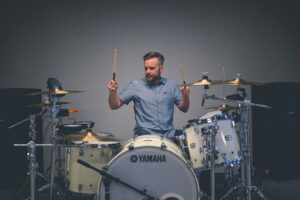
Piano, guitar, bass, keyboard, percussion, and other instruments chosen by participants.

Lyrics, storytelling, rhyme, structure, and turning feelings into words.
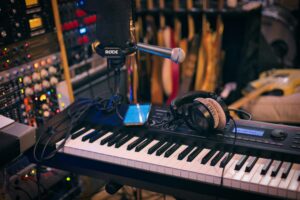
Beats, loops, digital recording, and basic editing.
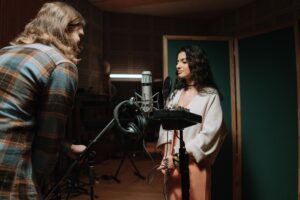
Microphone use, studio etiquette, and reviewing playback.
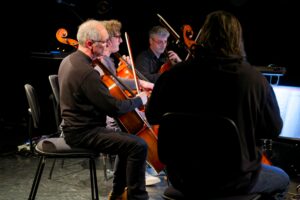
Stage presence, introductions, rehearsal, and audience communication.
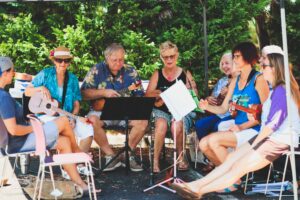
Performances, service projects, and volunteering in the community.
Ways of Participating
Participants are not mandated to sing, make eye contact, stand on a stage, or speak verbally to be able to comunicate.
Communication can occur through speech, AAC, writing, gestures, visual supports, or movement. A sensory break is a normal part of the session and is not treated as a problem.
Sensory-Friendly Environment
Skills practiced during music sessions extend into daily life. Participants practice arriving on time, preparing for the day, checking a schedule, and moving between activities. They practice following instructions with multiple steps, caring for shared equipment, waiting their turn, and sharing resources along with communicating needs, asking for help, and receiving feedback.
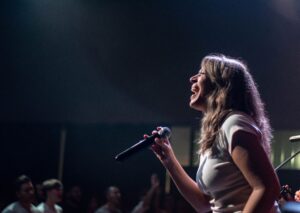
Growth does not stay inside the building. Participants may perform a short piece in the community, attend or watch a professional music event, or visit a recording studio or music venue. They may take part in community music activities, volunteer through a music-based service project, or practice introducing themselves to new people.
Tracking Progress
Staff watch for growth in communication, social interaction, musical skill, confidence, leadership, independence, and community involvement. Progress does not always move in a straight line — some weeks a participant may talk to a peer for the first time; other weeks, a participant may finish a task with less help than before.
A short showcase may take place at the end of a week or program cycle. Once a year, Big Shot Live brings participants together for a concert-style event with lighting and sound, attended by families, staff, and community partners — with awards recognizing Musical Growth, Communication, Confidence, Leadership, Teamwork, Creative Achievement, Independence, Community Participation, Peer Support, and Personal Achievement.
Working With Families & Regional Centers
A referral can come from a Regional Center Service Coordinator or from a family directly. Big Shot logs the referral quickly and sets up a meeting, usually within a day or two, to learn the person’s strengths, communication style, sensory needs, and interests.
Big Shot does not start paid services before written approval is in place. A phone call, email, or spoken agreement is not enough on its own.
Big Shot is a foundation. Families do not pay for services directly, services are paid for by the Regional Center (such as Harbor Regional Center or Westside Regional Center) once approval is in place.
Every participant gets a plan made just for them, connecting their goals to specific activities, needed support, and how progress will be measured.